Demystifying Commercial Backflow: RPZ vs. DCVA (And Which One Your Property Needs)
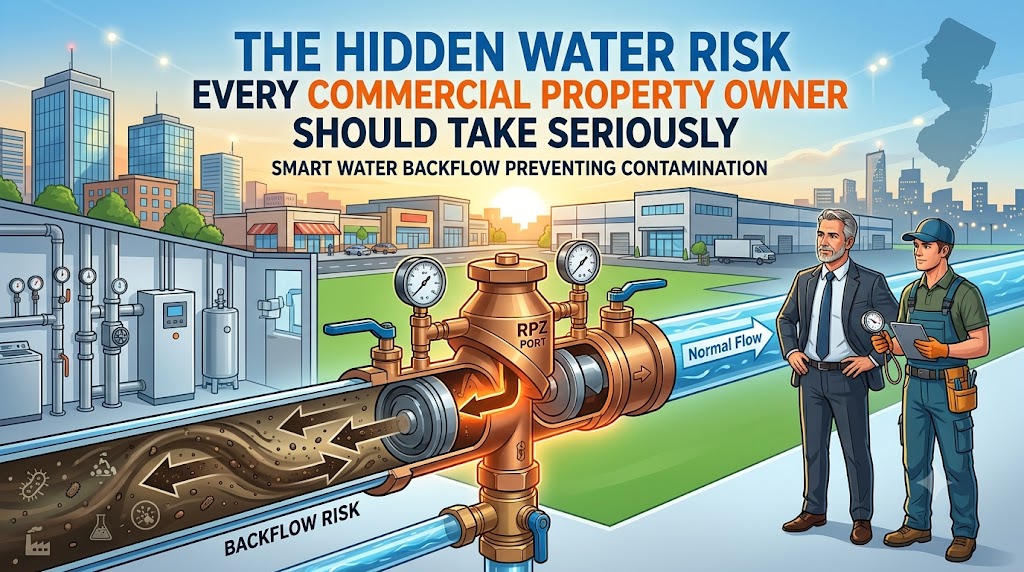
In our last post, we broke down the hidden water risks that every commercial property owner needs to take seriously. We looked at how sudden pressure drops can pull dangerous chemicals, bacteria, and industrial waste backward into your clean water supply.
But once you realize the massive public health, legal, and financial risks of backflow, the next question is practical: What is actually protecting your building?
If you walk down into your utility room or look near your water meter, you’ll likely see a heavy-duty assembly of brass and iron valves. For commercial properties in New Jersey, this is almost always one of two devices: a Reduced Pressure Zone (RPZ) Assembly or a Double Check Valve Assembly (DCVA).
They are not interchangeable. Choosing or maintaining the wrong one can lead to failed municipal inspections, heavy fines, or worse—a contamination event. Here is a straightforward guide to understanding the difference and knowing exactly what your facility requires.
1. The Heavy Hitter: Reduced Pressure Zone (RPZ) Assembly
An RPZ is the gold standard of backflow prevention. It is designed for high-hazard applications where backflow could introduce truly dangerous contaminants (like toxic chemicals, sewage, or heavy metals) into the public drinking water.
How it works:
An RPZ uses two independent check valves, but it adds a brilliant third layer of defense: a hydraulic relief valve located in a zone between them. If either check valve fails, or if there is a pressure imbalance, the relief valve opens and physically dumps the problematic water out out of the system onto the floor (or into a drain).
Where you usually need it:
-
Commercial kitchens and restaurants (due to grease, food waste, and chemical cleaners)
-
Medical facilities, labs, and dental offices
-
Chemical processing and manufacturing plants
-
Car washes and industrial laundries
-
Complex HVAC systems, cooling towers, and boilers using chemical additives
The RPZ Rule of Thumb: If the water inside your commercial system could cause severe illness or death if someone drank it, your local New Jersey water authority will almost certainly mandate an RPZ.
2. The Reliable Defense: Double Check Valve Assembly (DCVA)
A DCVA is a highly effective device designed specifically for low-hazard applications. These are environments where backflow might cause an aesthetic issue (like water looking cloudy, smelling odd, or tasting bad) but won’t pose an immediate toxic threat to human health.
How it works:
Like the RPZ, it features two independent, spring-loaded check valves inline. If water tries to flow backward, these gates snap shut to block it. However, unlike the RPZ, a DCVA is a closed system—it does not have a relief valve to dump water. If both internal valves happen to fail at the same time, the barrier is compromised.
Where you usually need it:
-
Standard office buildings (without specialized commercial equipment)
-
Dry warehouses and storage facilities
-
Fire sprinkler systems (that don’t use chemical flame retardants or anti-freeze additives)
-
Main water lines for certain low-risk retail spaces
Quick Comparison: RPZ vs. DCVA at a Glance
| Feature | RPZ (Reduced Pressure Zone) | DCVA (Double Check Valve) |
| Hazard Level | High Hazard (Toxic substances) | Low Hazard (Non-toxic/Aesthetic) |
| Visual Indicator | Dumps water visibly when failing or stressed | Concealed (Fails internally without leaking) |
| Installation Space | Requires a drain and clearance (it will discharge water) | Inline, compact, can be installed vertically or horizontally |
| NJ Testing Requirements | Mandatory Annual Testing | Mandatory Annual Testing |
The Golden Rule for Commercial Owners: Regular Testing
No matter which device is safeguarding your commercial property, they both share one major trait: they are mechanical devices with moving parts, springs, and rubber seals that wear out over time.
Because a DCVA fails internally without dripping, you won’t know it’s broken just by looking at it. And while an RPZ will tell you it’s failing by dumping water, a sudden relief valve discharge can flood a utility closet in minutes if nobody is there to see it.
This is why New Jersey municipal codes and water authorities mandate annual testing by certified professionals.
Get Compliant, Stay Protected
Don’t wait for a failed inspection notice from your town—or worse, a sudden plumbing emergency—to figure out what shape your backflow preventer is in.
At Smart Water Backflow, our ASSE-certified technicians specialize in the installation, repair, and mandatory annual testing of both RPZ and DCVA systems for commercial properties across New Jersey. We handle the paperwork, ensure your facility meets local codes, and give you total peace of mind that your water system is completely secure.
Is your annual backflow test due? Contact +1(732) 735-9318 Smart Water Backflow today to schedule your certified inspection.

Leave a Reply